Feedback Best PracticesProduct ManagementUser Feedback Management
Breaking Down the Feedback Silo: How to Collect Customer Feedback from Support Teams
Matthew
Share
How many times has this happened to you?
A customer sends detailed feedback about a critical issue via email. Your team discusses it in Slack. Someone mentions it in a meeting. Three weeks later, you realize nothing was actually done because the feedback lived in four different places and fell through the cracks.
Last week, we explored how customer support teams are the unsung heroes of product management, sitting on a goldmine of user insights that often gets trapped in support ticket silos.
Today, we’re diving deeper into one of the most persistent challenges in this space: the feedback silo problem, and how our new Email Forwarding feature helps support teams finally break free from it.
The Hidden Cost of Scattered Feedback
Picture this:
It’s Monday morning, and your customer success manager Sarah receives an email from a key client highlighting a critical UX issue. She forwards it to the product team via Slack. Meanwhile, your sales team gets similar feedback during a prospect call and mentions it in their weekly report. At the same time, your support team is handling three tickets about the same issue, but they’re buried in your help desk system.
By Friday, that critical feedback exists in four different places:
An email thread in Sarah’s inbox
A Slack message that’s been pushed down by other conversations
A bullet point in a sales report
Individual support tickets that show the symptoms but not the pattern
This is the feedback silo in action. Not only is valuable customer intelligence scattered across multiple systems, but the broader issue (that is actually impacting other customers) remains invisible to the product team.
When it comes to customer feedback and support teams, this scenario highlights the core problem. Which is that valuable insights exist, but they’re trapped in feedback silos.
The real cost of feedback silos? Your team is treating symptoms instead of fixing root causes. Which in the long run leads to stunted growth and customer churn.
Why the Feedback Silo Blocks Effective Customer Feedback Collection
But here’s what they miss: the majority of actionable feedback in B2B companies comes through informal channels, making it challenging to collect customer feedback from support teams effectively.
Consider these common scenarios:
A customer mentions a feature request during a support call, but it never gets logged systematically
Sales receives pushback about missing functionality during deal negotiations
Customer success teams hear about user frustrations during quarterly business reviews
Account managers receive detailed feedback via email about workflow improvements
Traditional feedback tools require customers to take extra steps to provide input. But the most valuable feedback often comes when customers are simply trying to get their job done and encounter friction along the way.
This is where Email Forwarding with Userback becomes a game-changer.
“Email Forwarding completely changed how we handle customer insights. Instead of feedback getting lost in individual inboxes, everything flows into one system where our product team can actually see patterns and take action.” — Kevin Chen, Customer Success Manager at TechFlow IT
How to Collect Customer Feedback from Support Teams with Email Forwarding
Our new Email Forwarding feature transforms any email into structured, actionable feedback within your Userback project. Here’s how it works to break down the feedback silo and help you collect customer feedback from support teams systematically:
1.Instant Feedback Capture from Any Source
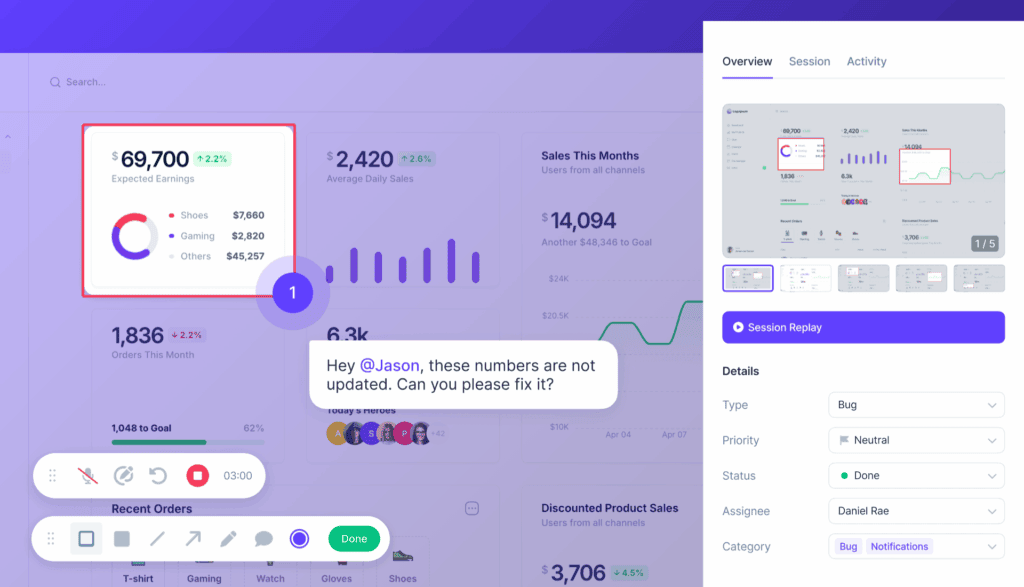
Instead of asking team members to remember to log feedback separately, they can simply forward emails directly to their project’s unique forwarding address. Userback’s AI automatically:
Extracts the core feedback from email conversations
Creates a clear title and description
Identifies the original reporter (even through forwarded emails)
Attaches any relevant files or screenshots
Example: Your customer success manager receives a detailed email from a client about confusing dashboard navigation. Instead of the feedback getting buried in their inbox, they forward it to Userback, where it becomes a trackable feedback item that your product team can prioritize and act on.
2.Pattern Recognition Across Communication Channels
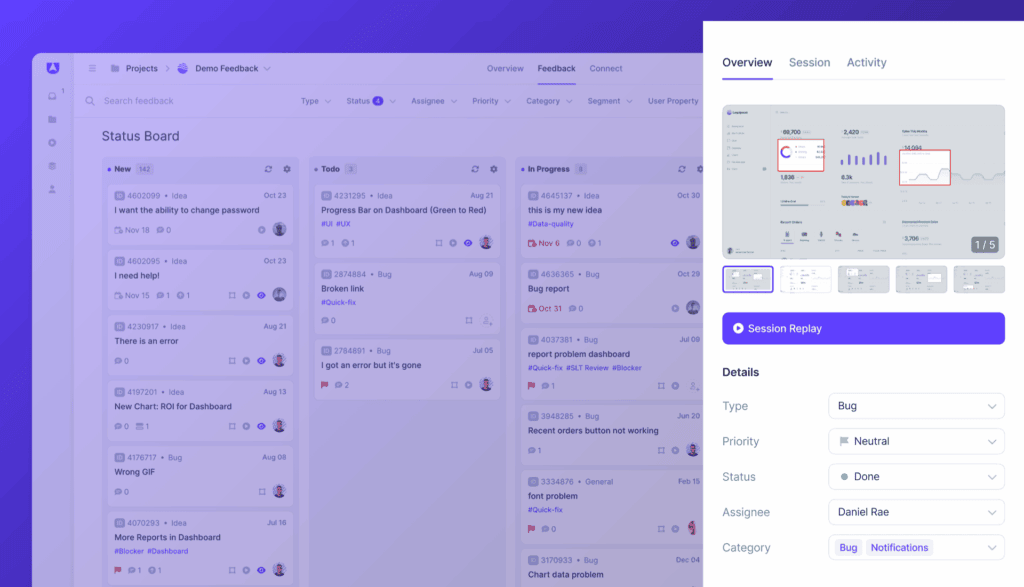
When feedback flows from emails, support tickets, and direct reports into a single system, patterns become visible. You might discover that:
The “small” UX issue mentioned in three separate emails is actually blocking user onboarding for 40% of new customers
Feature requests from sales calls align perfectly with support ticket themes
Customer success feedback reveals which features users love but don’t know how to fully utilize
3.Seamless Integration with Existing Workflows
Email Forwarding doesn’t require teams to change their communication habits. Whether your team uses:
Direct email communication: Any customer email can become structured feedback
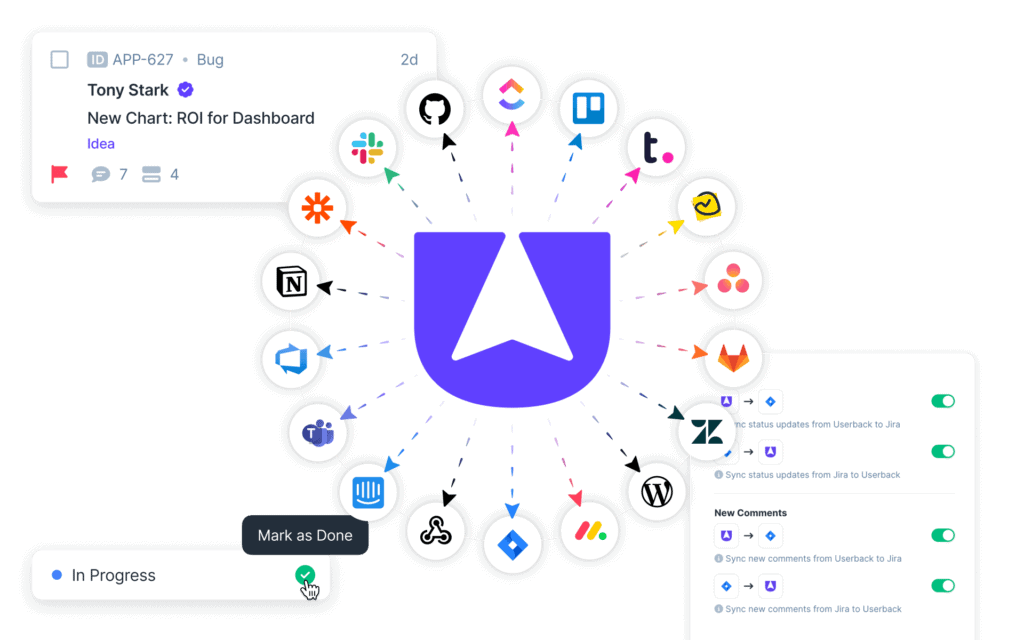
Zendesk or Intercom: Forward customer emails directly to Userback
Salesforce: Forward prospect feedback from deal conversations
HubSpot: Capture customer success insights from quarterly reviews
Improve how you collect customer feedback from support teams
Userback is an all-in-one feedback solution to collect more feedback and act on it faster.
Let’s explore specific scenarios where Email Forwarding transforms scattered customer feedback into actionable product insights:
Use Case 1: Support Escalation Intelligence
The Scenario: A frustrated customer sends a detailed email about a bug that’s affecting their entire team’s productivity. The support agent can fix the immediate issue, but the underlying problem needs attention from the product team.
Traditional Approach: The support ticket gets resolved, but the broader product implications remain in the support system silo.
With Email Forwarding: The support agent forwards the detailed customer email to Userback, creating a feedback item that includes both the technical details and the business impact. The product team can prioritize the fix based on complete context, not just a generic bug report.
Use Case 2: Customer Success Intelligence
The Scenario: During a quarterly business review, your biggest client emails a detailed breakdown of workflow inefficiencies they’ve discovered while scaling their team.
Traditional Approach: The email sits in the customer success manager’s inbox. Maybe it gets mentioned in the next product meeting, but the detailed context is lost.
With Email Forwarding: The customer success manager forwards the email to Userback. The AI extracts the key issues, maintains the detailed context, and the feedback is automatically categorized and routed to the product team. The customer success manager can even reply to the client saying, “Thanks! I’ve logged this in our product system—we’ll keep you updated on progress.”
Use Case 3: Sales-Driven Feature Requests
The Scenario: Your sales team consistently hears about missing integrations during prospect calls. These insights are mentioned in weekly sales meetings but never make it to the product roadmap with proper context.
Traditional Approach: Feature requests get mentioned verbally, documented in CRM notes, or shared in Slack messages that get buried.
With Email Forwarding: After each prospect call, sales reps forward the detailed feedback emails to Userback. Product managers can see not just what features are requested, but understand the business context, deal size, and competitive implications, all in one place.
Use Case 4: Multi-Channel Feedback Aggregation
The Scenario: The same UX issue surfaces across multiple channels, including customer emails, support tickets, and sales calls, but no one realizes it’s the same underlying problem.
Traditional Approach: Each team handles their piece of the feedback in isolation, missing the bigger pattern.
With Email Forwarding: All feedback flows into Userback, where patterns become visible. The product team realizes that the “minor” UI confusion mentioned in three separate emails is actually a major onboarding blocker affecting multiple customer segments.
See Userback In Action
Discover how Userback helps you collect, manage, and act on user feedback with ease.
The Bigger Picture: From Reactive Support to Proactive Product Intelligence
Email Forwarding represents a fundamental shift in how we think about customer support’s role in product development. It’s not just about creating a feedback silo solution. It’s about fundamentally changing how to collect customer feedback from support teams in a way that drives product decisions.
Every customer email becomes a potential product insight. Every support conversation becomes market research. Every piece of feedback becomes part of a larger story about how customers actually use your product versus how you think they use it.
This shift transforms customer support from a cost-center focused on resolving individual issues to a strategic function that drives product decisions and business growth.
Ready to Break Down Your Feedback Silo?
The feedback silo problem isn’t just about having scattered customer insights. It’s about missing the patterns that could transform your product strategy. Learning how to collect customer feedback from support teams effectively requires breaking down these silos and creating systematic processes.
Email Forwarding provides the bridge between the valuable customer intelligence flowing through your team’s daily communications and the structured feedback system your product team needs to make informed decisions.
Your customer support, success, and sales teams are already having these conversations with customers. The question is: are you capturing and acting on these insights, or letting them disappear into the communication void?
Train team members on forwarding high-value customer communications
Create processes for reviewing and acting on patterns in forwarded feedback
Measure the impact on both customer satisfaction and product development velocity
The companies that win in the long run, are those that can most effectively turn customer conversations into product improvements. Email Forwarding makes this possible at scale, without requiring customers to change their behavior or teams to abandon their existing workflows.
Ready to break down your feedback silo? Start forwarding emails to Userback today.