


 Integrations
  Feedback Management
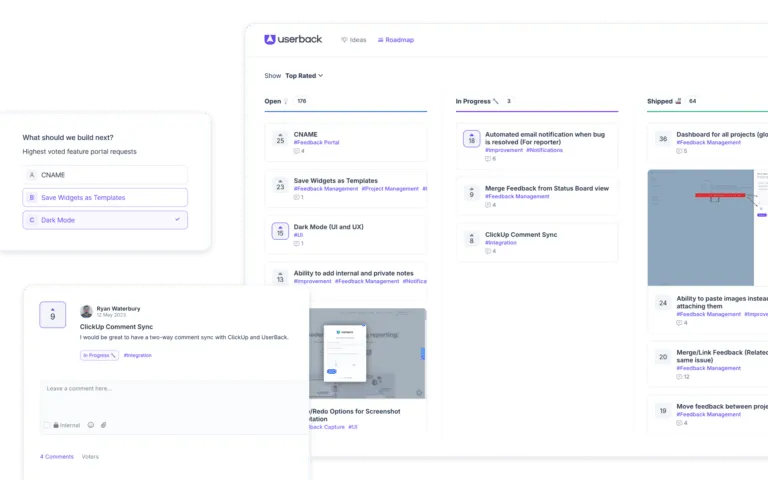
  Feature Portal
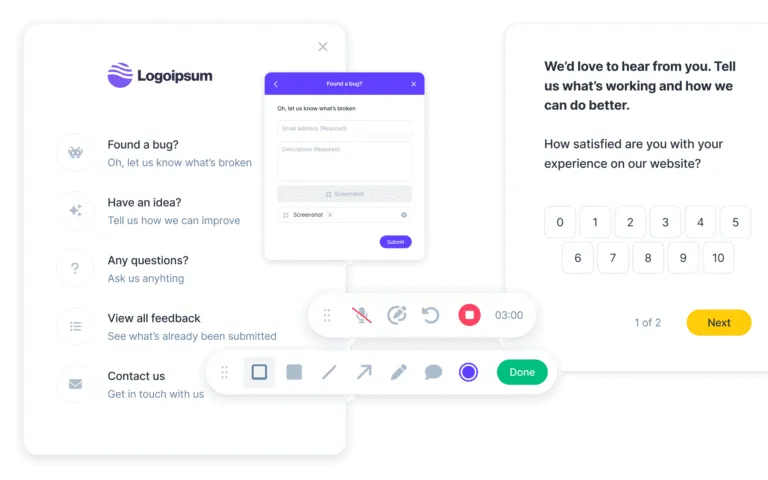
  Feedback Widget

About Matilda Workspace
Trusted by thousands of teams around the globe, Matilda.io is an AI-powered workspace platform that gives you an ultra-capable virtual teammate. We help people to be more efficient, tackle bigger challenges, stay in creative flow and discover a new level of work satisfaction. We do this with by integrating notes, projects, chats, calls, customers and more all in one app.
The Business Challenge
During product design, prototyping and MVP stages of our product development lifecycle we were using traditional communication channels to manage user feedback from usability testers and actual users.
We relied heavily on emails and direct messaging within our AI-powered app to collect feedback.
While this method was direct, it became quickly overwhelming to categorize and prioritize the feedback we received. This problem became more of an issue as our platform grew and more users came on-board.
For our team, the initial stage of collecting feedback proved to be the most challenging for several reasons:
- Lack of Structured Feedback: When users did provide feedback, it was often in freeform, making it hard to categorize and action. We received everything from vague comments to detailed bug reports, all in the same pipeline.
- Diverse User Channels: Our users interacted with us through multiple channels. We struggled to consolidate all this feedback.
- Passive Users: While some users were proactive in providing feedback, a significant portion remained passive, only voicing their concerns when they faced substantial issues, leading us to miss out on valuable insights.
- Cultural Barriers: Given our global user base, we sometimes faced challenges in interpreting feedback due to language barriers or cultural nuances in communication.
- Fear of Feedback Overload: Many users hesitated to provide feedback, thinking it would either go unnoticed in a sea of other comments or that they’d inundate our teams with too much information.
- Technical Hurdles: Our initial feedback collection tools were not intuitive for all users. Non-tech-savvy users found it challenging to navigate and provide meaningful input.
The Userback Solution
After assessing multiple feedback management tools and platforms, we decided to adopt Userback for several compelling reasons:
- Intuitive user interface: Userback’s interface stood out as both user-friendly and intuitive. This was crucial because we wanted a solution that not only our team but also our users could easily navigate without a steep learning curve.
- Centralized feedback management: Userback’s centralized dashboard was a game-changer, we could systematically categorize, prioritize and act on feedback without anything falling through the cracks.
- Cost-effective: When considering the overall value proposition, Userback emerged as a cost-effective solution. It addressed our core challenges without burdening us with unnecessary features or a hefty price tag.
- Scalability: Given our growth trajectory and evolving needs, we wanted a solution that could scale with us. Userback’s commitment to regular updates, coupled with its robust infrastructure, assured us of its scalability.
- Alignment with our vision: Userback shares our vision of being user-centric and agile. Their emphasis on actionable insights, community engagement, and iterative development mirrored our own aspirations.
- Rich metadata collection: The ability for users to provide feedback with enriched metadata and screen captures proved invaluable, ensuring that the feedback we received was contextual, reducing guesswork and back-and-forth communications.
- Public and private feature portals: We appreciated the flexibility Userback offered in terms of feedback visibility. The option to create public feature portals fostered community engagement, while private portals ensured we could gather and process sensitive feedback discreetly.
- Positive reviews and case studies: Userback’s reputation preceded it. Several trusted industry peers and online reviews vouched for its effectiveness, further reinforcing our confidence in the product.
- Seamless integration: Userback offered seamless integration with our existing tools and systems. Whether it was our CRM, project management tools, or development platforms, Userback fit right in, ensuring that our workflows remained uninterrupted and efficient.
Given these factors, choosing Userback became a clear and strategic decision for us, positioning us to better understand, engage with, and deliver value to our users.
How we use Userback day-to-day
At our company, given the collaborative nature of our all-in-one workspace, several teams and roles have been actively using Userback to streamline feedback and improve our product:
- Leadership & Strategy Teams: Executives and Strategic Planners occasionally dive into Userback to get a firsthand understanding of user sentiments, helping shape the company’s broader direction and strategies.
- Development & Engineering Team: Software developers reference Userback to understand the context behind bugs or feature requests, making their coding more targeted and effective. QA engineers use it during testing to correlate their findings with user-reported issues, ensuring a comprehensive testing approach.
- Product Management Team: Product managers use it to prioritize feature development based on real user feedback, ensuring our roadmap remains aligned with user needs. Product analysts utilize it to study feedback patterns and identify broader requirements and pain points for users.
- UX/UI Design Team: Designers integrate Userback insights into their design process, ensuring that user interface and experience enhancements are in line with actual user feedback and requirements.
- Customer Support & Success Teams: Customer Support Representatives utilize Userback as a reference point when assisting users, understanding their historical feedback, and offering solutions. Customer Success Managers review feedback to ensure that our key accounts and power users are satisfied, using insights to drive proactive engagements.
- Sales & Marketing Team: Sales Representatives occasionally reference Userback to understand potential leads’ concerns or requirements better, positioning our platform’s features in line with their needs. Marketing Specialists tap into the feedback to refine their messaging, ensuring that our communications resonate with the actual benefits users experience or desire.
How Userback has changed how we work
- Visual Feedback Mechanism: Users can now easily annotate screenshots or highlight specific areas of concern on our platform, providing our development and design teams with clear visual context to understand and address issues.
- User-friendly Interface: Userback’s intuitive feedback collection interface has encouraged even our most passive users to share their thoughts. The tool is easy to navigate, making the process seamless for users from diverse technical backgrounds.
- Structured Feedback Forms: Rather than receiving an array of unstructured comments, Userback’s customizable feedback forms allow us to prompt users for specific information, making the feedback more actionable.
- Resolution Time: The time taken to address and resolve user feedback has reduced significantly. Previously, we had an average resolution time of 10 days. With Userback, this has dropped to just 3 days, marking a 70% reduction in resolution time.
- Centralized Collection: With Userback, we now have a unified platform to gather feedback. This has simplified our feedback management process and ensured that no valuable insights are lost.
- Prioritization and Tagging: Post-collection, Userback allows for feedback to be tagged, categorized, and prioritized. This streamlines our internal processes, enabling quicker decision-making and actioning of feedback.
- User Engagement: The number of users actively engaging with our feedback portal has increased by 60%. This shows a heightened interest and involvement from our user base, leading to richer insights.
- Product Development Efficiency: The number of iterations needed to finalize a new feature or fix has decreased by 40%. This is due to more precise and actionable feedback received through Userback.
- Cost Savings: By streamlining our feedback process and reducing the time taken to action insights, we’ve realized cost savings.
Matilda Workspace’s Results with Userback

Faster Resolution
Resolution time has dropped from 10 days to just 3, which is a 70% improvement with Userback.

User Engagement
User engagement in our feedback portal is up 60%, bringing deeper and more frequent insights.

Quicker Development
Feature and fix iterations are down 40%, thanks to clearer, more actionable feedback.