



Tools that don’t communicate create feedback black holes.
Feedback Best PracticesUser Feedback Management
How We Use Userback to Power Our Own Customer Support

At Userback, we’ve always believed that feedback is the fuel for better products.
As a small software team ourselves, we face many of the same challenges our customers do. Bugs to fix, roadmaps to prioritize, support tickets to manage, and customers who want to be heard.
This shared experience as a growing software team has given us invaluable insight into what our ideal customers actually need. When we set out to share how different teams at Userback run their day-to-day, it felt natural to turn the spotlight on ourselves.
In this article, we’ll show you how we, as a small software team, handle bug reporting, customer support, and product decisions, with the hope that our wins, mistakes, and refined workflows can help you face similar challenges.
First, watch our team walk through exactly how we handle customer support using Userback. From the moment feedback arrives to how we close the loop with customers.
Why Our Shared Experience Matters
Building software while experiencing the same pain points as your customers creates a unique advantage. When something is clunky in our workflow, we immediately understand how it affects other small teams. When something saves us hours, we know it’ll have the same impact for our customers.
Using Userback daily isn’t just dogfooding. It’s how we’ve learned to build features that actually solve real problems. We’ve felt firsthand how painful feedback silos can be, how easy it is for things to fall through the cracks, and how valuable it becomes when feedback flows effortlessly between teams.
Understanding our customers’ challenges from the inside out has shaped every feature we build. We solve our own problems, then scale those solutions for teams everywhere.
Jon Tobin, Userback Co-Founder and CEO
The Tools That Power Our Day-to-Day
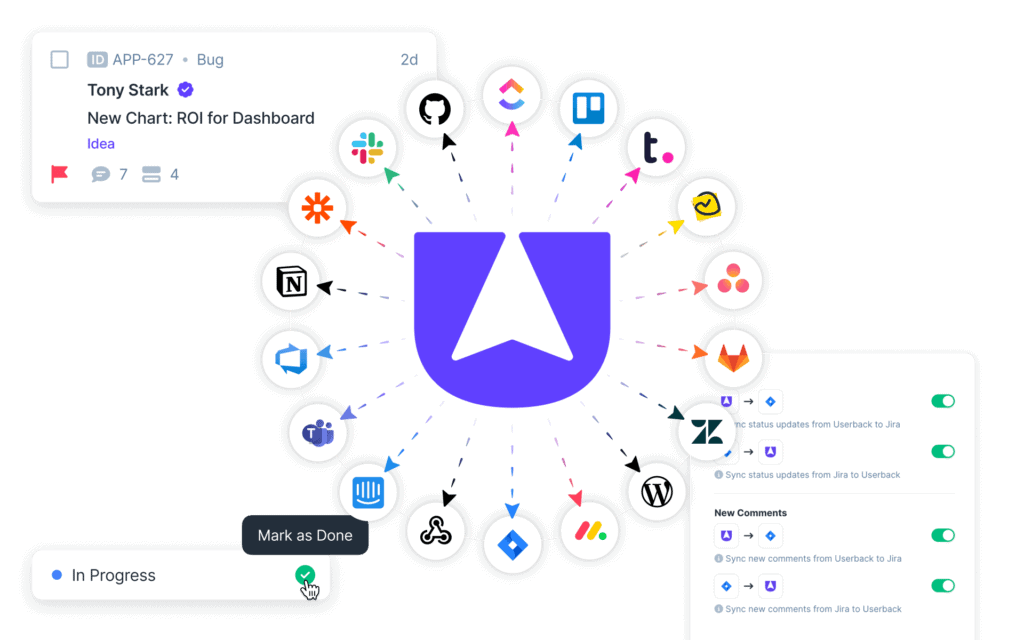
While Userback anchors our feedback workflow, it works alongside the same tools our customers use daily. Each team at Userback uses integrations to turn what could be chaos into clarity.
Customer Support
Our support team lives in Intercom, just like many of our customers. When bug reports or feature requests come in, they flow straight into Userback where they can be tracked, categorized, and prioritized. From there, we decide whether items move to Jira for development or into the Ideas Portal for broader customer validation.
We also connect with our community through Discord and LinkedIn, staying close to the conversations that matter most.
Product & Development
Our development team works in Jira and GitHub – the same stack many of our customers use. Our Jira integration ensures feedback captured in Userback arrives with full context screenshots, session replays, and customer details. Developers never have to hunt for missing information.
With Smart Sync, every Jira update flows back to Userback automatically. Support knows exactly when something is fixed and can immediately close the loop with customers.
We used to spend hours coordinating between tools. Now updates flow automatically, and nothing gets lost in translation.
Lee Le, Userback Co-Founder and CTO
Leadership Team
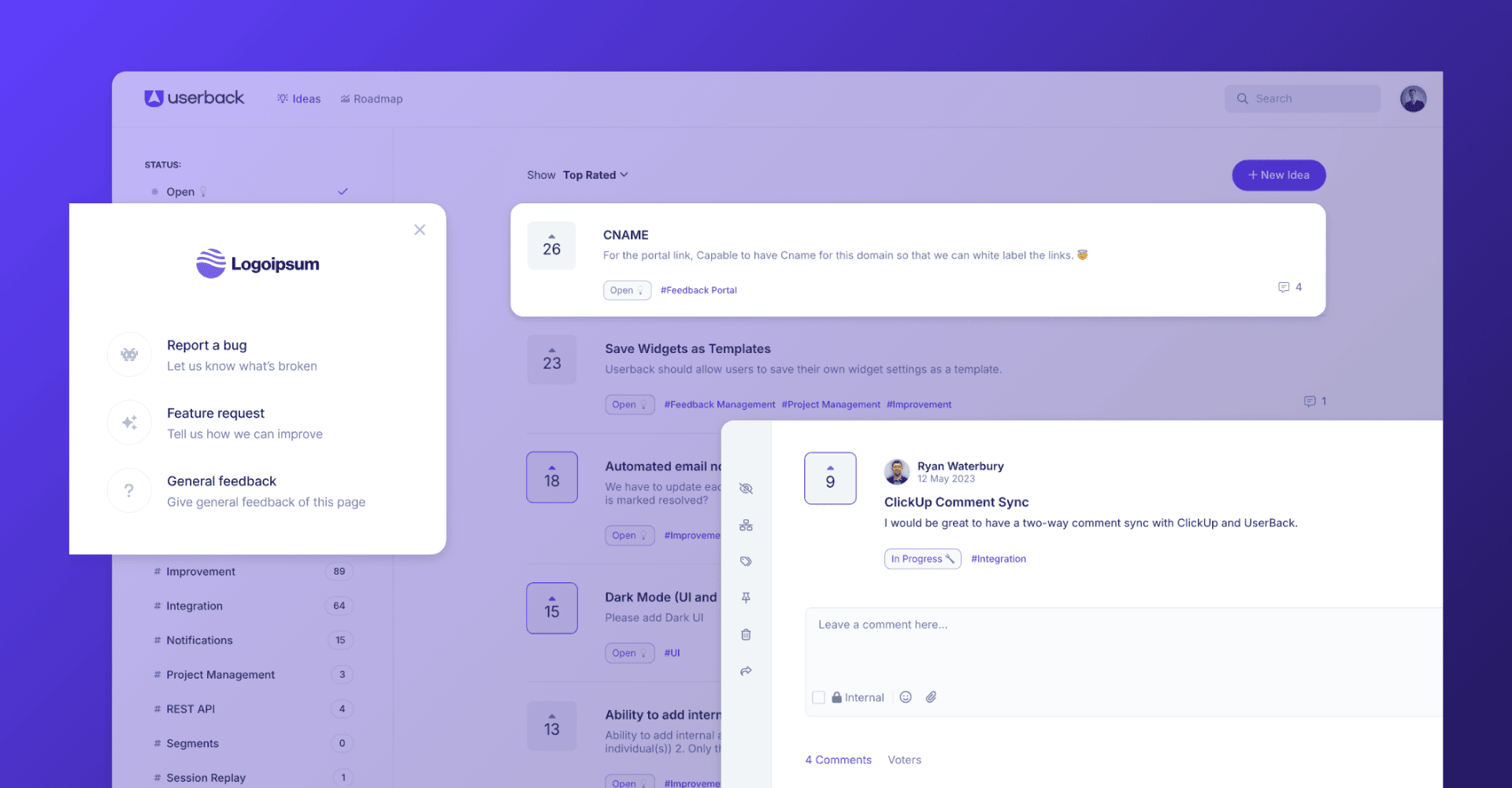
For leadership, the Ideas Portal bridges strategy and reality. We see what customers care about most, track feature votes, understand pain points, and share roadmap progress all in one place.
The transparency creates trust. Customers watch their feedback turn into features, while internally, leadership stays aligned without constant status meetings.
Company-Wide Communication
Slack ties everything together. Critical feedback from Userback automatically appears in relevant Slack channels, ensuring the right people can respond quickly. Nothing urgent gets buried in noise.
See Userback In Action
Discover how Userback helps you collect, manage, and act on user feedback with ease.
The Results We’ve Achieved
This workflow hasn’t just made our processes smoother. It’s transformed how we think about feedback and improved our performance in many areas.
- Faster response times: Automatic feedback routing has cut our average bug resolution time by nearly 40%.
- Better team alignment: Support, development, and leadership share a single source of truth, eliminating information silos.
- Stronger customer relationships: Portal transparency lets customers literally watch their feedback become reality.
Lessons We’ve Learned
Our current setup didn’t happen overnight. We experimented with various tools and configurations before finding this winning combination. Some tools were too rigid, others too complex, and many just didn’t integrate well with our existing workflow.
Key insights from our journey:
1. Integrations make or break success.
2. Transparency drives engagement.
When customers see progress, they stay invested in your product’s evolution.
3. Simplicity scales
Solutions shouldn’t require extensive training or create adoption barriers.
Ready to streamline your support workflow?
Connect feedback from support tickets, bugs, and feature requests in one intelligent platform.
Why This Matters for Your Team
If you’re running a growing software team, you’re likely facing challenges similar to ours. Keeping customers happy, resolving issues quickly, and making smart prioritization decisions based on feedback.
Our experience as a team facing these same challenges has taught us what actually works in practice, not just in theory. The workflow we’ve developed proves it’s possible to break down feedback silos and close the loop with customers consistently.
The Key Takeaway
Every piece of feedback should drive product improvement. Whether you’re in support, development, or leadership, the goal remains the same – build better products faster, with customer insights guiding every decision.